
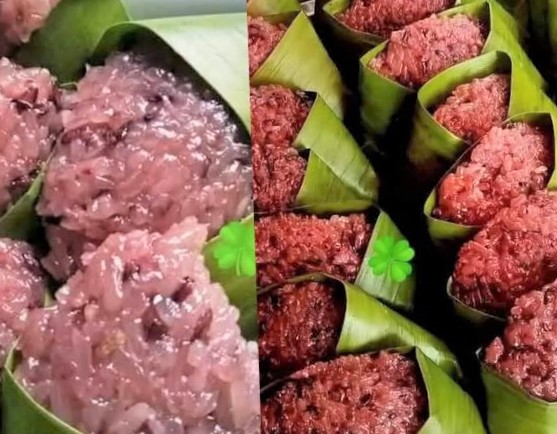
Puto Maya is a beloved traditional Filipino snack or breakfast dish made from glutinous rice (malagkit), black rice (tapol), coconut milk, and ginger. This aromatic, slightly sweet, and creamy sticky rice is traditionally steamed in banana leaves, giving it a subtle earthy fragrance. It is often served with sikwate (Filipino hot chocolate) or ripe mango slices, making it a comforting and wholesome dish that is perfect for special occasions or daily enjoyment.
Ingredients
Rice Mixture:
-
1 kg malagkit rice (glutinous rice, also called pilit)
-
1/2 cup black rice (tapol)
Coconut Milk Mixture:
-
4 1/2 cups coconut milk (fresh from 2 coconuts, or canned)
-
2/3 cup sugar (adjust to taste)
-
2 tsp salt
Flavoring:
-
2 thumbsized ginger, crushed
Optional:
-
Banana leaves for lining the steamer
Equipment Needed
-
Large bowl for soaking rice
-
Steamer or steaming setup
-
Large mixing spoon or spatula
-
Saucepan for coconut milk mixture
-
Knife and cutting board
-
Banana leaves (optional)
-
Measuring cups and spoons
Step-by-Step Instructions
Step 1: Soak the Rice
-
Rinse the malagkit and black rice separately under cold running water to remove excess starch.
-
Soak the malagkit rice in water for 4–5 hours or overnight for best results.
-
Soak the black rice (tapol) in water for 8 hours or overnight.
Tip: Soaking the rice ensures a softer texture and reduces steaming time. The black rice takes longer to soften than the white glutinous rice.
Step 2: Drain and Combine
-
After soaking, drain the water from both types of rice.
-
If soaked separately, mix the malagkit and black rice in a large bowl until evenly combined.
Step 3: Prepare the Steamer
-
Fill the steamer with water and bring it to a boil.
-
Line the steamer tray with banana leaves if available. This prevents the rice from sticking and adds a subtle, fragrant aroma.
-
Place crushed ginger underneath the rice in the steamer, or lightly mix it with the rice.
Step 4: First Steaming
-
Place the soaked rice mixture into the steamer.
-
Steam the rice for 25–30 minutes, until it starts to soften but is not fully cooked.
Tip: Make sure there is enough water in the steamer to avoid burning.
Step 5: Prepare Coconut Milk Mixture
-
In a medium saucepan, combine 4 1/2 cups coconut milk, sugar, and salt.
-
Heat gently over low heat, stirring continuously until the sugar and salt dissolve completely.
Tip: Avoid boiling the coconut milk, as this can cause it to separate.
Step 6: Combine Rice and Coconut Milk
-
Transfer the partially steamed rice to a large mixing bowl.
-
Pour the sweetened coconut milk over the rice and mix thoroughly. Make sure the rice absorbs most of the coconut milk for a creamy texture.
Tip: Use a spatula or wooden spoon to fold the rice gently without mashing the grains.
Step 7: Second Steaming
-
Return the coconut milk-infused rice mixture to the steamer.
-
Steam for 35–45 minutes, or until the black rice is fully cooked and the mixture is sticky and slightly glossy.
-
Check occasionally to make sure the water in the steamer doesn’t run dry.
Serving Suggestions
-
Serve warm with a cup of sikwate (Filipino hot chocolate) for a traditional pairing.
-
Optional: pair with ripe mango slices, which complement the creamy, slightly sweet sticky rice.
-
Can also be served as a snack or merienda anytime.
Tips for Perfect Puto Maya
-
Fresh coconut milk provides the best flavor, but canned coconut milk works fine if fresh is unavailable.
-
Keep ginger slightly crushed, not finely grated, to give a subtle aroma without overpowering the dish.
-
Banana leaves are optional but highly recommended—they add authentic aroma and prevent sticking.
-
Adjust sugar according to taste. Some prefer a slightly less sweet version.
-
If making ahead, store in an airtight container in the refrigerator and reheat by steaming briefly.
Variations
-
Colorful Puto Maya: Add a few drops of food coloring or pandan extract for a vibrant green version.
-
Nutty Puto Maya: Mix in roasted peanuts or cashews for added crunch.
-
Mango Puto Maya: Serve with slices of sweet ripe mango for a dessert-like version.
Cultural Notes
-
Puto Maya is especially popular in the Visayas and Mindanao regions of the Philippines.
-
Traditionally eaten for breakfast or merienda, often during fiestas or family gatherings.
-
Served with sikwate, which is made from tablea (pure cocoa blocks), it provides a comforting, hearty snack loved by both young and old.